
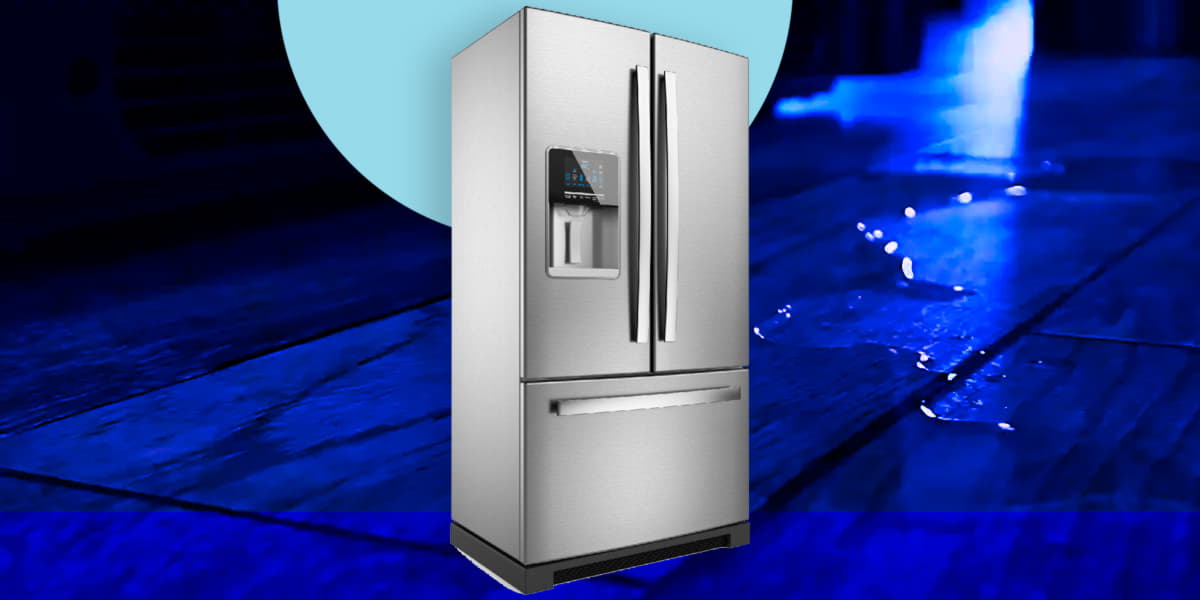
Having a leaking refrigerator is quite annoying provided that it can cause water damage to your kitchen and possibly indicate greater problems with your appliance. Recognizing the typical reasons behind refrigerator leaks will enable you to quickly identify and address the issue. Here are several potential causes of refrigerator leaks, along with the recommended solutions for each problem.
1. Clogged or frozen defrost drain
An obstructed or frozen defrost drain is among the most frequent reasons for refrigerator leaks. The drain pan located at the bottom of the refrigerator collects water that is produced during the defrost cycle. The defrost drain may get clogged with ice or debris over time.
Solution: Find the defrost drain hole, which is typically located behind the freezer section. To remove any ice or debris, wash with warm water. The obstructions may be removed with a long, flexible brush or a pipe cleaner.
2. Damaged door seals
The door seals, also known as gaskets, are designed to maintain the refrigerator’s internal temperature and prevent moisture from escaping. Warm air can seep in through broken, loose or damaged seals, causing condensation and water leaks.
Solution: Examine the door seals for indications of deterioration. Make sure they are free of debris and food particles by giving them a frequent cleaning. Replace the damaged seals with new ones, making sure they fit properly to prevent air from leaking.
3. Faulty water filter
Usually, refrigerators with ice makers or water dispensers also feature water filters. In this case, water leaks may occur from a filter that is damaged, clogged or improperly installed.
Solution: Verify that the water filter was installed correctly and replace it if needed. It is recommended by most manufacturers to replace the water filter every six months. Make sure the replacement filter fits the model of your refrigerator and is installed properly.
4. Cracked or overflowing drain pan
The defrost cycle produces water which is collected in the drain pan. Leaks may occur from the pan’s eventual cracking or deterioration. Besides, if the drain pan is overflowing, it may be a sign of a malfunctioning defrost system.
Solution: Check the drain pan at the refrigerator’s bottom and replace it if it has cracks. Verify that the refrigerator is level and look for obstructions in the defrost drain if it is overflowing.
5. Ice maker issues
Another potential leak source is an ice maker. Water leaks within or outside the refrigerator might be caused by problems like a frozen fill tube, a faulty inlet valve or a loose connection.
Solution: Check for leaks by closely inspecting the connections to the ice maker and the water inlet valve. Make sure all loose connections are tight and fix any broken parts if needed.
6. Improperly aligned refrigerator
Leaks could also result from improper water flow to the drain pan if your refrigerator is not level. This is especially typical for older models or if a refrigerator has been moved.
Solution: Make sure your refrigerator is positioned correctly by using a level. The appliance should be level from front to back and side to side. For this purpose, most refrigerators contain leveling screws or adjustable feet.
7. High humidity and condensation
High air humidity can result in excessive moisture within and surrounding your refrigerator, which might cause leaks. This can be especially problematic during some seasons or in areas with high humidity levels.
Solution: Make sure the doors to your refrigerator are closed correctly and aren’t left open for long periods of time. Another way to lower general humidity levels in your kitchen is to use a dehumidifier.
There are several reasons why a refrigerator leaks: from simple obstructions and broken seals to more complicated issues with the ice maker or water filter. You may frequently fix leaks on your own and increase the longevity of your appliance by being aware of these typical reasons and putting the recommended solutions into practice. However, if leaks continue to occur, it could be time to hire a qualified specialist for comprehensive testing and fixing.


